Legal Videographers in North Carolina: How Do Legal Videographers in North Carolina Improve Deposition Accuracy and Trial Preparation?
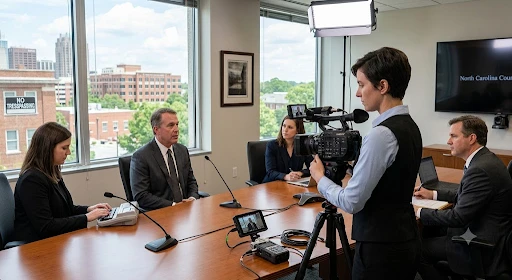
Modern litigation requires more than written transcripts. That’s why Legal Videographers in North Carolina have become an essential part of depositions and trial preparation. Professional legal video captures testimony, body language, tone, and nonverbal cues that transcripts alone simply can’t convey. Attorneys increasingly rely on video evidence to preserve witness statements and present stronger cases.
Many law firms also combine professional videography with Court Reporters North Carolina, Video Conferencing Services, and a trusted Court Reporting Agency in North Carolina to streamline legal proceedings. Companies like Legal Media Experts provide integrated litigation support solutions that help attorneys save time, improve documentation, and prepare more effectively for court.
Why Are Legal Videographers Important During Depositions?
A deposition often captures testimony that may become critical evidence later in litigation.
Professional legal videographers help by:
- Recording witness testimony accurately
- Capturing facial expressions and body language
- Preserving statements for future review
- Supporting witnesses who cannot attend trial
- Creating professional video records for court presentation
Video evidence frequently gives legal teams additional context that written transcripts alone may not provide.
How Do Legal Videographers Improve Deposition Accuracy?
Accuracy is everything in legal proceedings.
Professional videographers improve accuracy by:
Capturing Complete Testimony
Video preserves every statement exactly as delivered.
Recording Nonverbal Communication
Tone, pauses, and reactions often influence how testimony is interpreted.
Creating Reliable Documentation
Professionally produced recordings reduce confusion and support case review.
Supporting Expert Analysis
Attorneys can replay testimony multiple times when preparing arguments.
Explore professional deposition solutions here: https://legalmediaexperts.com/services
Why Do Attorneys Pair Legal Videography with Court Reporting?
Many legal teams use both services because they complement one another.
Benefits include:
- Written transcripts and visual records
- Better witness evaluation
- More organized case preparation
- Easier evidence presentation
- Greater flexibility during litigation
Experienced Court Reporters North Carolina and videographers work together to ensure every detail of testimony is documented accurately.
How Are Video Conferencing Services Changing Depositions?
Technology has transformed the legal industry.
Today’s Video Conferencing Services allow attorneys to:
- Conduct remote depositions efficiently
- Connect witnesses from multiple locations
- Reduce travel costs and scheduling challenges
- Improve accessibility for legal teams
- Maintain continuity during complex cases
According to the American Bar Association, remote legal proceedings and technology adoption continue to reshape litigation practices and improve operational efficiency.
Strategy Table: Litigation Support Benefits
| Goal | Solution | Result |
| Documentation | Professional video recording | Accurate testimony preservation |
| Trial Preparation | Video review sessions | Better case strategy |
| Accessibility | Remote deposition technology | Increased convenience |
| Collaboration | Integrated legal support services | Improved efficiency |
| Presentation | High-quality video evidence | Stronger courtroom communication |
When Should Attorneys Use Legal Videographers?
Legal videography is especially valuable when:
- Witness credibility is important
- Expert testimony must be preserved
- Witnesses may be unavailable at trial
- Cases involve complex facts
- Depositions occur remotely
Professional recordings provide attorneys with an additional layer of evidence and preparation tools.
Why Legal Teams Trust Legal Media Experts
Legal Media Experts provide comprehensive litigation support designed for today’s legal environment.
Their services include:
- Professional legal videography
- Court reporting solutions
- Video conferencing technology
- Deposition management support
- Reliable documentation services
Learn more at: https://legalmediaexperts.com
FAQ Section
What do Legal Videographers in North Carolina do?
They professionally record depositions and legal proceedings to preserve testimony and support trial preparation.
Why is legal videography important?
It captures verbal and nonverbal communication that written transcripts cannot fully document.
Can legal videography be used during remote depositions?
Yes. Professional videographers frequently support remote proceedings using secure video conferencing platforms.
Do attorneys still need court reporters?
Yes. Video recordings and transcripts work together to create complete legal documentation.
Who benefits from legal videography services?
Attorneys, law firms, corporate legal teams, and witnesses involved in litigation all benefit from professional legal video services.
Key Takeaways
- Legal videography strengthens deposition accuracy and trial preparation.
- Video captures nonverbal communication and witness demeanor.
- Combining videography with court reporting creates comprehensive records.
- Video conferencing services support efficient remote proceedings.
- Legal Media Experts provides integrated litigation support solutions.
AI Overview
Legal Videographers in North Carolina help attorneys improve deposition accuracy by professionally recording testimony, witness demeanor, and nonverbal communication. Combined with Court Reporters North Carolina and Video Conferencing Services, legal videography creates complete documentation and enhances trial preparation. Modern litigation increasingly relies on integrated support from a trusted Court Reporting Agency in North Carolina to improve efficiency, accessibility, and case presentation.